Well pressure tanks: how they work, signs of failure and when to replace one
A well pressure tank stores water under pressure so your pump does not have to start every time someone opens a tap. When the tank loses its air charge or the pressure switch wears out, you get swinging water pressure and a pump that starts far more often than it should. Kuntz Pump & Well Supply repairs and replaces well pressure tanks and pressure switches as part of our well pump repair service across Northeast Colorado.
How a well pressure tank works
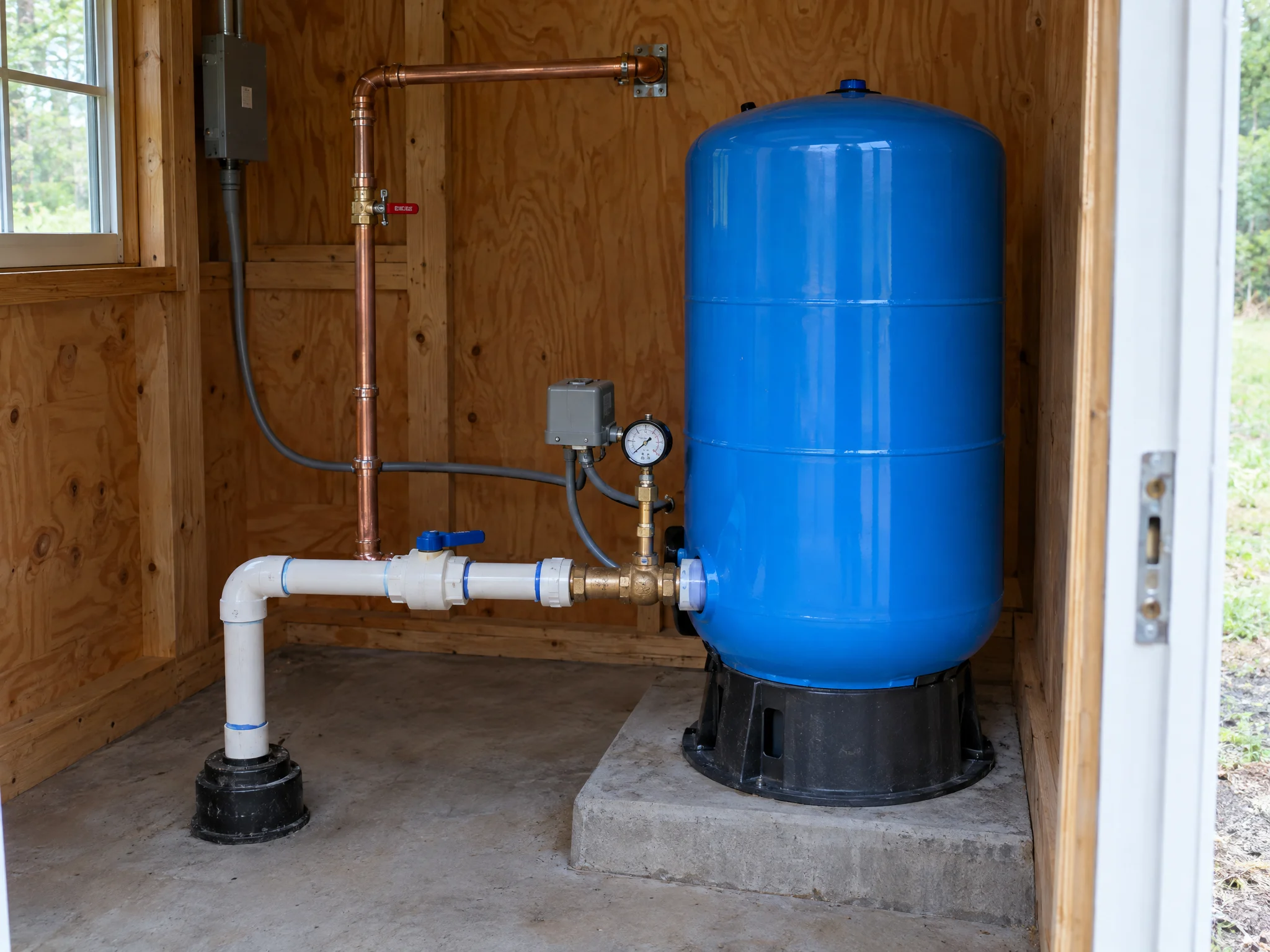
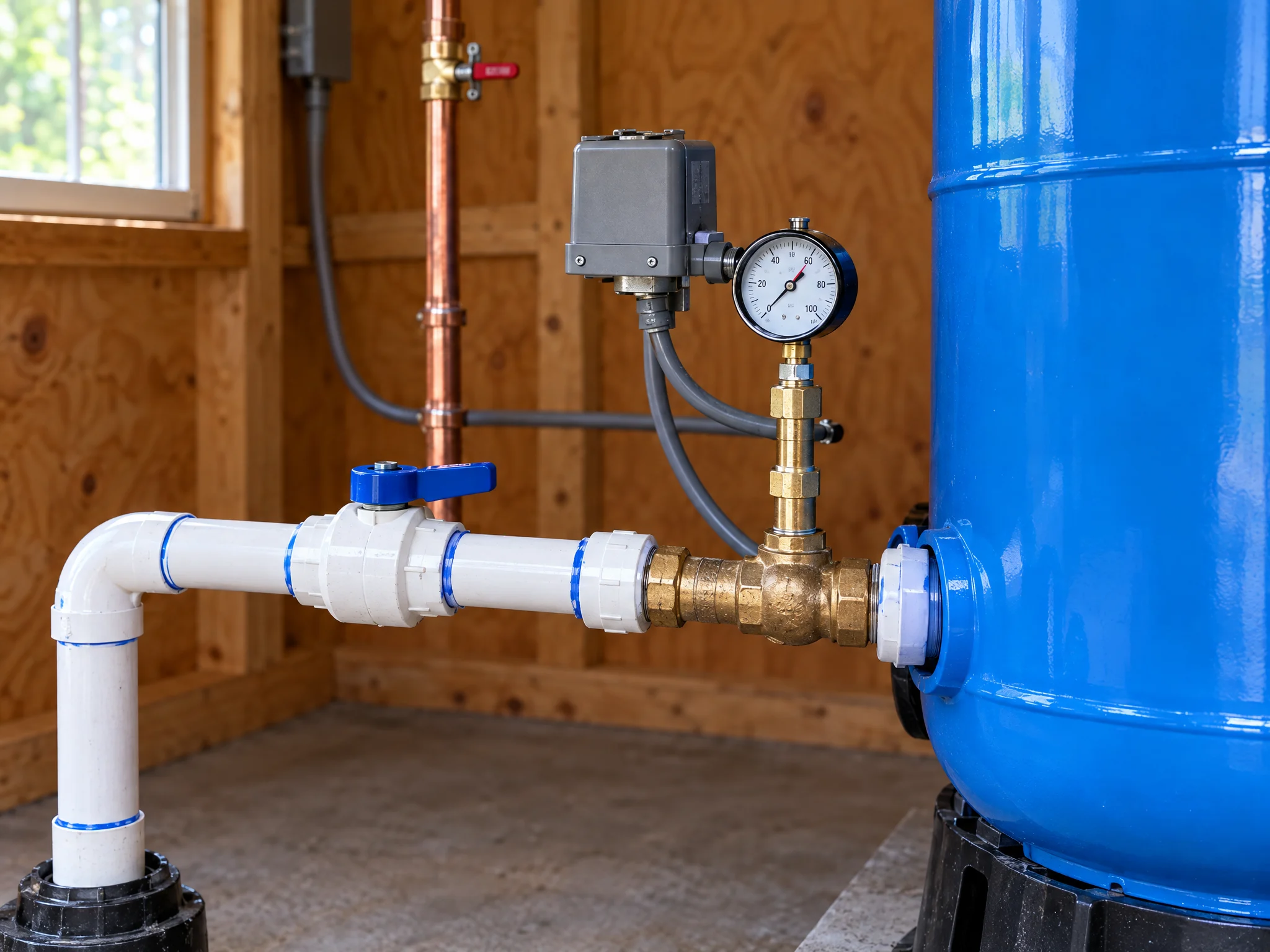
Most modern well pressure tanks have a bladder or diaphragm inside that separates water from a cushion of compressed air. When the pump runs, water fills the tank and squeezes the air. When you open a tap, that compressed air pushes water out to the house without the pump starting right away.
The pressure switch watches the system pressure. When pressure drops to the cut-in setting, the switch starts the pump. When it reaches the cut-off setting, the switch shuts the pump off. The tank lets the pump run in longer, less frequent cycles, which is easier on the motor than many short starts. The EPA's private well guide covers more on caring for a home water system.
Signs of a bad well pressure tank
The most common sign is short cycling: the pump clicking on and off every few seconds while water runs. Other signs include pressure that swings up and down at the faucet, spurting or pulsing water, and a pressure gauge that never settles.
A tank that sounds or feels full of water from top to bottom has usually lost its air charge or has a failed bladder. Rust, leaks or water pooling around the tank are signs the tank itself is near the end of its life.
Why a failed tank can damage your pump
Every pump start puts strain on the motor and the start components. When a tank is waterlogged, the pump may start every time a toilet is flushed or a glass is filled. All of those extra starts add up, and a failed tank can shorten the life of an otherwise good pump. Fixing a tank problem early is far cheaper than replacing a burned-out pump.
Why the air charge matters
A bladder tank depends on the right amount of air to work properly, and the correct setting depends on how your pump and pressure switch are set up. When the air charge is off, the tank holds less usable water and the pump cycles more often. Checking and setting it is best left to a pump professional, since it involves shutting off power and draining the system.
If the tank will not hold air, or water comes out of the air valve, the bladder has likely failed and the tank needs to be replaced.
The pressure switch matters too
Not every pressure problem is the tank. A pressure switch has electrical contacts that open and close each time the pump runs, and over time they can pit, burn or stick. A plugged pressure switch tube can also give the switch a false reading. Symptoms of a bad switch can look a lot like a bad tank, so we check both before recommending a fix.
Repair or replace?
A tank that has simply lost some air can sometimes be recharged and put back in service. A tank with a failed bladder, rust or leaks needs to be replaced. When we replace a tank, we size it for your pump and household, set the air charge, and check the switch, gauge, valves and fittings on the tank tee.
A larger tank stores more water between pump starts, which means fewer cycles and steadier pressure. That can be worth considering when the existing tank is undersized for the home or the number of people using water.
Pressure relief valves and fittings
A pressure relief valve protects the system if the switch ever fails to shut the pump off. Along with the gauge, drain valve and fittings on the tank tee, it is part of a complete, safe installation. We check and replace these parts as part of any tank job, and we look them over during our well inspections.
Well pressure tank service in Northeast Colorado
Kuntz Pump & Well Supply is based in Atwood and serves Logan, Morgan, Sedgwick, Washington, Phillips and eastern Weld counties. We hold Colorado water well construction and pump installation license #1574 and follow the state's well construction and pump installation rules. Call (970) 522-2035 or send a request describing what your pressure is doing, and we will track down whether it is the tank, the switch or the pump.